
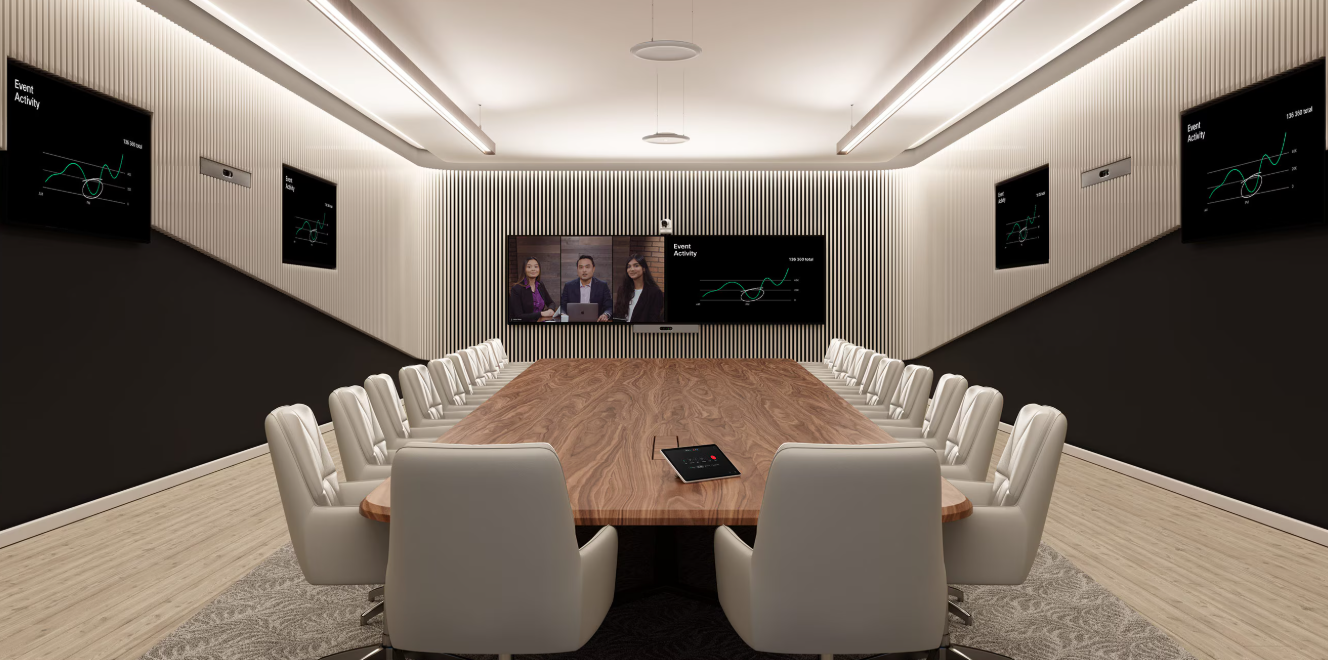
What Causes Echo In Conference Rooms?
Eliminate Echo And Improve Meeting Clarity
Experienced and trusted by business for over twenty years
Solution
Echo Is Usually A Design Problem, Not A User Problem.
01
Identify The Source
Echo can be caused by room acoustics, speaker placement, microphone positioning, improper system configuration, or a lack of professional audio processing.
02
Evaluate The Environment
Hard surfaces such as glass, concrete, drywall, and large boardroom tables can reflect sound and create acoustic challenges.
03
Implement The Solution
The right combination of DSP technology, microphone design, speaker placement, and acoustic treatment can dramatically improve audio performance.
FAQs
-
Remote participants often hear audio that is being picked up by room microphones after it has already been played through the room speakers. This is one of the most common conference room audio issues
-
Not by themselves. While microphone selection is important, echo is usually addressed through proper system design, DSP processing, speaker placement, and room acoustics.
-
In many cases, yes. Audio tuning, DSP upgrades, speaker adjustments, microphone repositioning, or acoustic improvements can often resolve echo issues without requiring a complete replacement.
Why is there an Echo?
Many conference room echo issues occur when microphones pick up audio being reproduced by the room's speakers. Without proper echo cancellation and system design, participants can hear delayed or repeated audio that negatively impacts meeting quality.
Hard surfaces and poor room acoustics are among the most common causes of conference room echo.
1
Echo is often more disruptive to remote participants than to those physically present in the room
2
Professional DSP systems use acoustic echo cancellation technology to help eliminate feedback and audio repetition.
3
How DVAI Removes the Echo
We design boardroom AV systems by first understanding how the room will be used, rather than starting with specific products. Room size, seating positions, viewing distances, acoustics, collaboration platforms, network infrastructure and user expectations are considered before equipment is selected.
Assess → Design → Integrate → Commission → Support
“Recent research found that 75% of hybrid meetings experience at least one technology failure, while 73% of participants report audio-related issues. Organizations that invest in dedicated meeting room technology can significantly reduce these disruptions and improve collaboration outcomes.”

About the Experts
DVAI is a business technology consulting and integration firm providing audiovisual, video conferencing, network and communications solutions. For more than 20 years, DVAI has worked with corporate, government, municipal and education organizations to design, integrate and support workplace technology environments.