
Auto-Tracking Cameras Vs Fixed Cameras
Discover Why Intelligent Cameras Are Replacing Static Views
Experienced and trusted by business for over twenty years
Solution
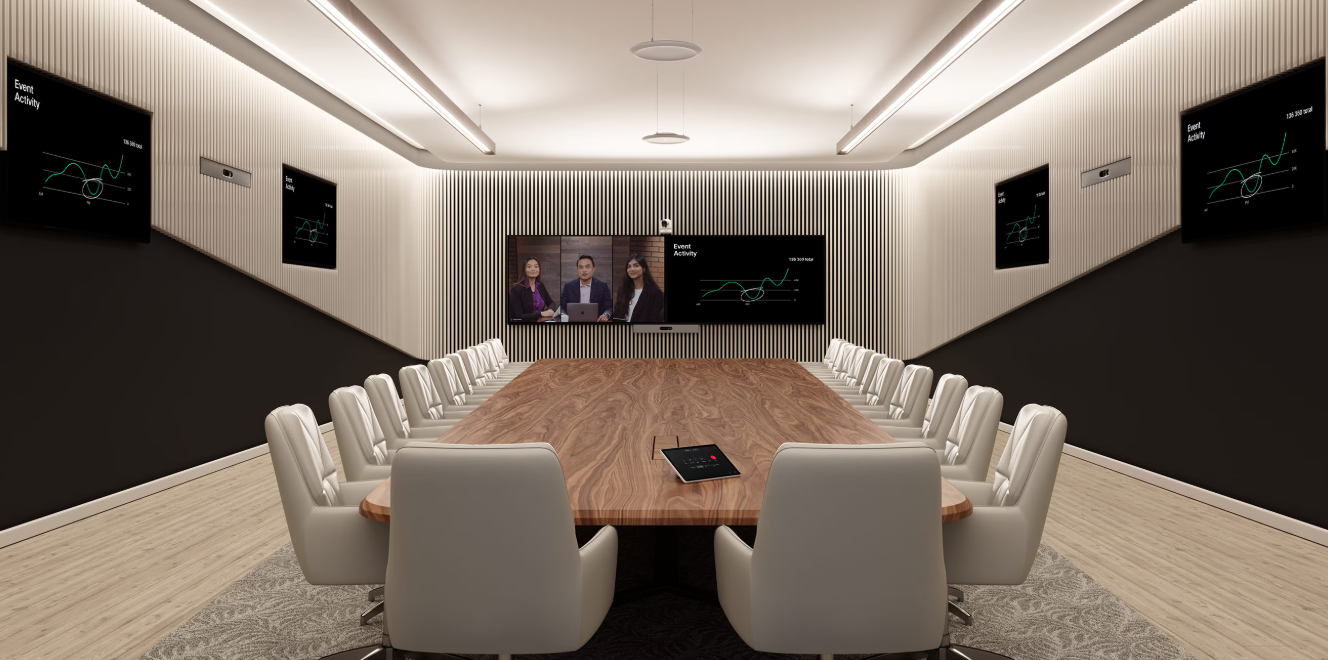
Auto-tracking cameras automatically follow and frame participants as they move and speak, creating a more natural experience for remote attendees. Fixed cameras show only one predetermined view, which can leave participants too small, off-camera, or difficult to see.
01
Evaluate Meeting Style
Consider whether meetings are primarily presentation-based, discussion-based, executive meetings, training sessions, or collaborative workshops.
02
Compare Camera Approaches
Fixed cameras provide a consistent room view, while auto-tracking cameras actively frame participants, follow presenters, and adapt to changing meeting dynamics.
03
Deploy The Right Solution
Select a camera system that aligns with how the room is actually used and the experience you want to create for remote participants.
FAQs
-
For many modern hybrid meeting spaces, yes. Auto-tracking cameras create a more engaging experience by automatically focusing on participants and adapting to the conversation.
-
Fixed cameras can work well in smaller meeting rooms, huddle spaces, or environments where participants remain seated and the room layout rarely changes.
-
No. Modern systems use AI-powered tracking, framing, and zoom technologies to automatically adjust without user intervention.
Do I Need Auto-Tracking Cameras?
Many conference room echo issues occur when microphones pick up audio being reproduced by the room's speakers. Without proper echo cancellation and system design, participants can hear delayed or repeated audio that negatively impacts meeting quality.
2
3
Keep Participants Engaged
Create A More Natural Experience
Future-Proof Meeting Spaces
Auto-tracking cameras automatically follow speakers and adjust framing as conversations move around the room, helping remote participants stay connected to the discussion.
1
Instead of staring at a wide shot of the entire room, remote attendees can focus on the active speaker, making meetings feel more personal and interactive.
As hybrid work continues to evolve, intelligent camera technologies provide a more dynamic and professional meeting experience without requiring manual camera operation.
How DVAI Helps you Choose
We design boardroom AV systems by first understanding how the room will be used, rather than starting with specific products. Room size, seating positions, viewing distances, acoustics, collaboration platforms, network infrastructure and user expectations are considered before equipment is selected.
Assess → Design → Integrate → Commission → Support
About the Experts
DVAI is a business technology consulting and integration firm providing audiovisual, video conferencing, network and communications solutions. For more than 20 years, DVAI has worked with corporate, government, municipal and education organizations to design, integrate and support workplace technology environments.